

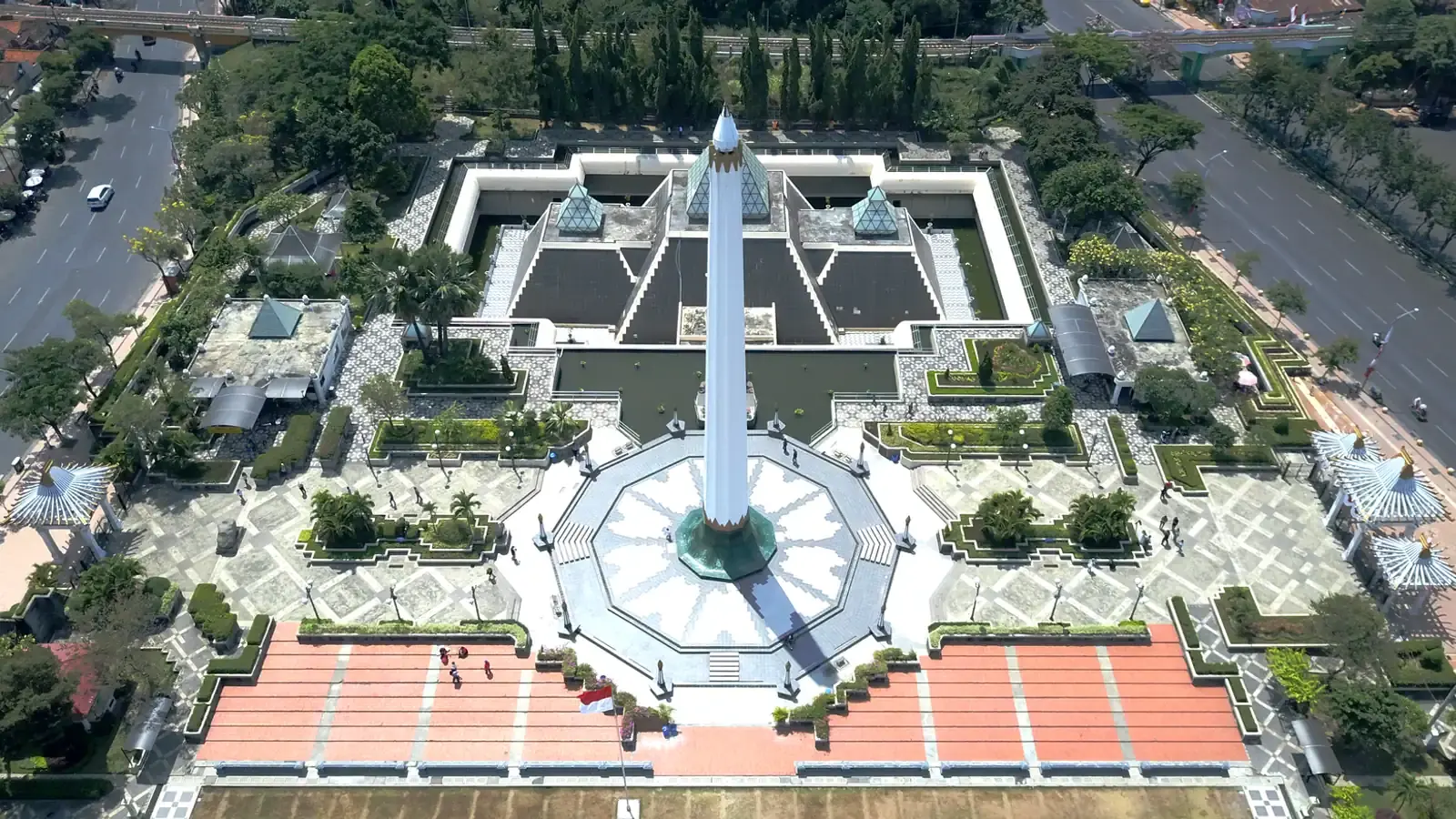
Surabaya is Indonesia's second city and its operating capital. Jakarta holds the headquarters; Surabaya moves the goods. Tanjung Perak, the country's second-busiest port, handled around 4 million TEUs in 2024, and the city's economy grew 5.87% in 2025 on the back of trade, manufacturing and logistics. The workforce this produces is distinct: people trained by shipping schedules, production lines, hospital systems and some of Indonesia's strongest technical universities, rather than by corporate towers alone.
Remote operations talent from a city that runs on logistics
Surabaya's deepest and most distinctive pool is operational. Trade is the city's largest sector and manufacturing its second, with the industrial corridor extending through Rungkut toward Gresik and Sidoarjo. Careers here are built on purchase orders, freight documents, inventory counts, customs paperwork and supplier calls, which converts directly into:
- Logistics coordination: shipment tracking, freight documentation, customs-document preparation, scheduling
- Procurement and purchasing support
- Bookkeeping, AP/AR and financial reporting
- E-commerce operations and inventory administration
- Sales administration, CRM upkeep and customer support
If your business ships physical products, Surabaya is arguably the most naturally matched hiring market in Indonesia.
Browse workers by category or start with virtual assistants and bookkeepers.
Technical depth most cities can't offer
ITS (Institut Teknologi Sepuluh Nopember) is one of Indonesia's top engineering universities, covering informatics, industrial technology and, fittingly for this city, maritime engineering. PENS, the state electronics polytechnic, adds applied informatics, telecommunications and multimedia graduates built for hands-on work. PPNS, the shipbuilding polytechnic, turns out welders, safety administrators and marine engineers whose documentation, QC and estimating skills transfer cleanly into remote back-office roles for international construction, manufacturing and engineering firms. That maritime-industrial pipeline exists in no other Indonesian hiring market at this depth.
For software specifically: expect solid developers, QA engineers and data analysts from ITS and PENS, supported by a developing local startup scene. Surabaya is not Jakarta's tech ecosystem, but its technical bench is real.
Two more pools round out the city. Universitas Airlangga, one of Indonesia's leading health and comprehensive universities, feeds healthcare administration: medical scheduling, records, claims support and research assistance. And Petra Christian University plus Universitas Ciputra supply designers, bilingual business graduates and entrepreneurship-trained generalists suited to small international teams.
English: second only to Jakarta
Surabaya scored 519 in the 2025 EF English Proficiency Index, above Indonesia's national score of 471 and second only to Jakarta among listed Indonesian cities, inside EF's moderate band. The exposure here is commercial rather than touristic: export businesses, multinational manufacturing and university international programs. As everywhere on the platform, assess individually: profiles show unedited written English, a paid test task shows working quality, and a live call settles customer-facing roles.
What salaries look like
Surabaya is not Indonesia's discount market, and treating it as one is how offers fail here. The 2026 city minimum wage is Rp 5.288.796, about $326, the highest in East Java, and developers average around Rp 7-7.5 million locally. Fresh-graduate admin staff earn Rp 3-5 million. Realistic remote offers: $450-700 for admin, support and operations roles; $700-1,000 and up for developers and experienced specialists. Paid directly to the worker, with no agency margin, and competitive because it comes without the commute toward the industrial corridor or a relocation to Jakarta.
Practical notes
- Surabaya runs on Western Indonesia Time (UTC+7): full business-day overlap with Australia, mornings for Europe, evenings for US time zones.
- Fiber broadband is standard across the city. Confirm each worker's home connection during interviews; a speed test screenshot is a normal ask.
- Workers from Gresik and Sidoarjo are part of the same Greater Surabaya labor market; treat them as local.
FAQ
How much does it cost to hire a remote worker in Surabaya? Admin, operations and support roles typically fill at $450-700 per month full-time. Developers and specialists range $700-1,000+, paid directly to the worker.
What is Surabaya best for? Operations and logistics back-office, bookkeeping, e-commerce, healthcare administration, engineering support (CAD, estimating, QC documentation) and practical software development.
How is the English? The second-highest measured city score in Indonesia (EF 519, moderate band), with commercial rather than tourist exposure. Still screen individually; every profile shows written samples.
Can I verify who I'm hiring? Yes. Workers can verify with KTP, the Indonesian government ID, and ID-Verified badges appear on profiles before you contact anyone.
*Sources: BPS, EF EPI 2025.*
*Figures here are market estimates, not guarantees, and they change over time. Check current wages, salaries and rankings before making a decision.*