

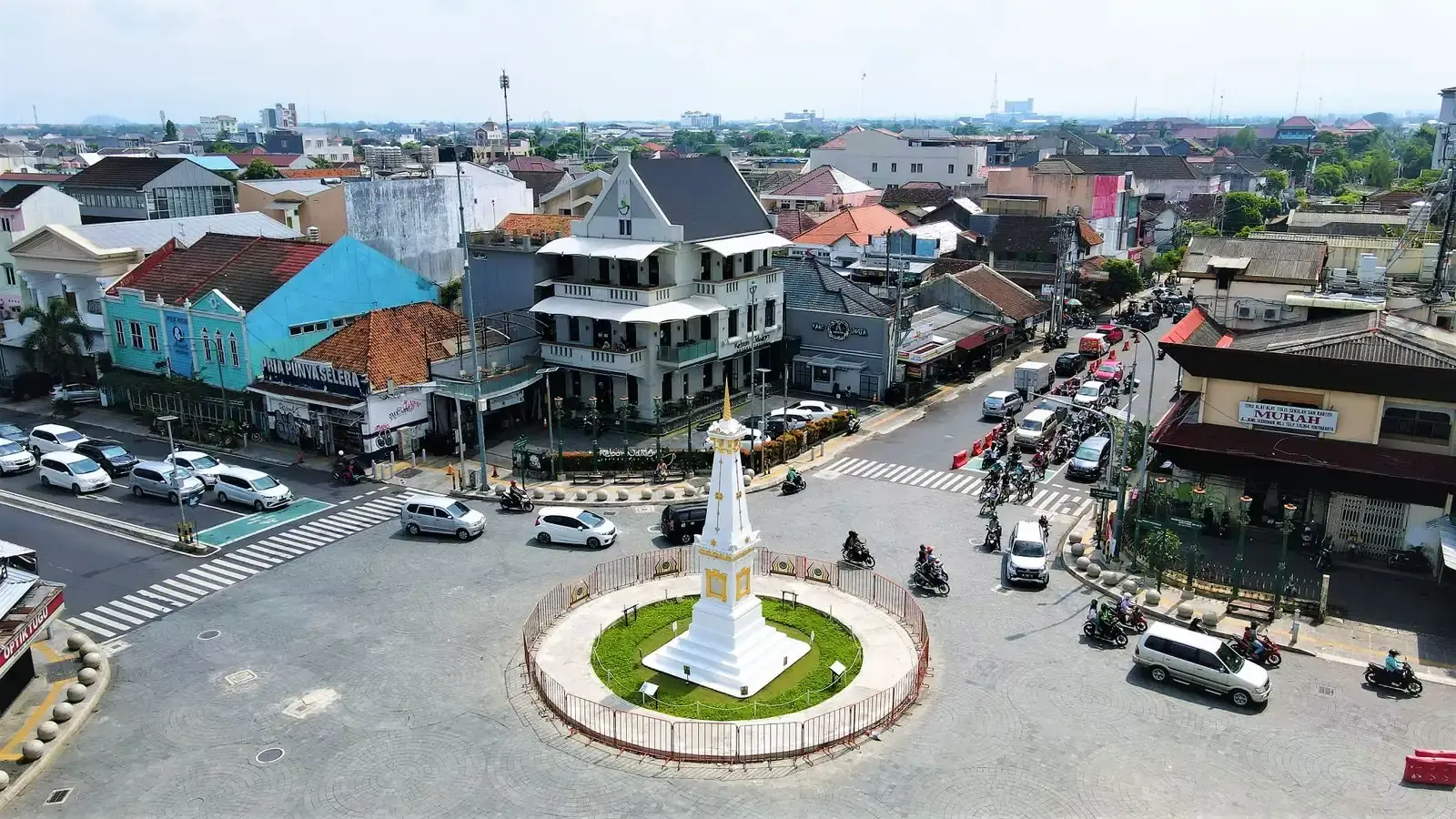
Yogyakarta, Jogja to everyone who lives there, is Indonesia's student capital. Gadjah Mada University, one of the country's top two, graduated 3,664 students in its August 2024 period alone. UNY, the state education university, sent out 5,320 more in one 2025 ceremony. ISI, Indonesia's leading arts institute, trains illustrators, animators and filmmakers a few kilometers south. And the city's 2026 minimum wage is Rp 2.827.593, about $174 per month, one of the lowest in Indonesia. Nowhere else in the country is the gap between the quality of graduates and the local wage floor this wide. That gap is usually resolved by graduates leaving for Jakarta. It can also be resolved by you.
The creative city, by training rather than vibe
Jogja's creative reputation is institutional, not aesthetic. ISI Yogyakarta runs dedicated programs in visual communication design, applied animation covering story development, visual development and motion, plus film, photography and fine arts. Around it sits a decades-old economy of studios, agencies, art communities and music scenes. The practical result for you is depth in exactly the roles that are hardest to fill well remotely:
- Graphic and brand designers
- Illustrators, animators and motion designers
- Video editors and photo retouchers
- Social-media creatives and content producers
If your job post has ever attracted fifty portfolios of the same template work, this is the city where the portfolios look different.
Three more pipelines most cities lack
Education content. UNY's teacher-training identity makes Jogja unusually strong for online tutors, curriculum developers, worksheet and course creators, LMS administrators and academic editors. If you run a tutoring, e-learning or coaching business, this is arguably the best supply in Indonesia.
Research and analysis. UGM's graduates work in research, finance, data, policy and international programs. For research assistance, technical writing, business analysis and nonprofit support, the pool is deep and accustomed to academic English.
Practical software. Jogja has a long-established ecosystem of small software houses. Expect solid WordPress, PHP, front-end, mobile and QA candidates from UII, AMIKOM and UGM, priced well below Jakarta. For senior product engineering, Bandung and Jakarta remain deeper.
Browse workers by category or start with graphic designers and virtual assistants.
What salaries look like
Local benchmarks: the city minimum wage is Rp 2.827.593, junior programmers earn Rp 3-6.4 million, a web developer averages around Rp 4 million (Jobstreet and Indeed, 2026), and admin roles cluster near the wage floor. A direct remote salary of $400-900 per month is roughly two to five times the local floor, in a city where a good room near campus rents for Rp 500.000-1.800.000.
Two honest caveats. UGM's strongest graduates compete nationally and internationally and are priced accordingly; budget properly for senior analytical and engineering roles. And what keeps people here is not being trapped: people choose Jogja for its life and community, and historically had to leave it to be paid well. A fair international salary removes the reason to leave, which is the practical version of retention.
The English question
EF's 2025 index scores Yogyakarta at 501, above the national average of 471 and at the edge of EF's moderate band. Treat that as a signal about the pool, not a promise about any candidate: the city has a large internationally exposed graduate segment (UGM and UII international programs, exchange students, heritage tourism), and levels vary widely. Profiles show each worker's own written English; use a paid test task, and a live call for customer-facing roles.
Practical notes
- Jogja runs on Western Indonesia Time (UTC+7): full business-day overlap with Australia, mornings for Europe, evenings for US time zones.
- The labor market spans the city plus Sleman and Bantul; candidates listing any of the three are the same pool.
- Fiber broadband is standard in the urban and campus areas. Confirm each worker's home connection; a speed test screenshot is a normal ask.
FAQ
How much does it cost to hire a remote worker in Yogyakarta? Admin and support roles are typically filled at $400-600 per month full-time; designers, editors and developers range $500-900, paid directly to the worker.
What is Jogja best for? Creative production (design, illustration, animation, video), education content and tutoring, research support, and practical web development. For deep corporate experience, see our Jakarta page instead.
Is English reliable? Yogyakarta scores above the national average (EF 501), and it varies by person. Screen with the written samples on every profile plus a paid test task.
Can I verify who I'm hiring? Yes. Workers can verify with KTP, the Indonesian government ID, and ID-Verified badges appear on profiles before you contact anyone.
Browse Yogyakarta workers, free
*Sources: BPS, EF EPI 2025, Jobstreet and Indeed listings, university announcements.*
*Figures here are market estimates, not guarantees, and they change over time. Check current wages, salaries and rankings before making a decision.*